
Choosing freight broker training can be confusing when every provider claims to offer the best course. Prices, teaching formats, and support vary considerably. You need to know what each program actually teaches before spending money.
The top freight broker training options cover practical skills, including finding shippers, booking freight, and negotiating rates. However, some focus on beginners, while others target experienced logistics professionals. A course certificate also differs from the legal authority required to operate independently.
This guide compares five freight broker training programs based on published prices, curriculum, format, and support. You’ll learn which options suit different budgets and learning goals. You’ll also discover how to evaluate training quality and avoid misleading promises.
What Is Freight Broker Training?
Freight broker training teaches you how to arrange freight transportation between shippers and motor carriers. A shipper needs goods transported, while a carrier provides the truck. The broker connects them, negotiates rates, and coordinates shipments.
Training covers activities such as customer prospecting, carrier selection, freight documentation, and shipment tracking. Beginners can enroll without previous logistics experience. However, completing training does not automatically qualify someone to operate an independent brokerage.
Top 5 Freight Broker Training Programs in 2026
Five freight broker training options worth comparing are Freight Broker Boot Camp, Brooke Training, Freight 360, Loadtraining, and TIA’s CTB program. These providers offer different approaches to learning freight brokerage. Their suitability depends on your experience, budget, and need for instructor support.
The following selections emphasize curriculum, published pricing, delivery format, and student assistance. These are practical comparison categories, not independently verified performance rankings. Course completion rates, employment outcomes, and graduate earnings have not been independently compared.
1. Freight Broker Boot Camp – Best for Beginners
Freight Broker Boot Camp provides self-paced online training created by Dennis Brown. It covers business setup, freight pricing, finding shippers, and working with carriers. The standard program currently advertises $389 for lifetime access, while the Sales Accelerator package costs $997.
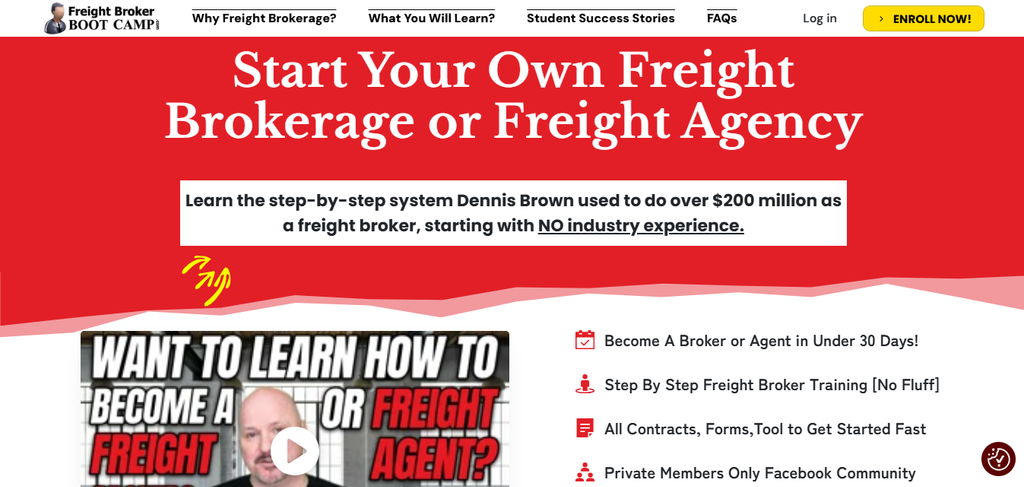
Students receive recorded instruction, business resources, and community support. Its published refund policy includes a 14-day money-back period and a conditional 60-day guarantee. The main limitation is the recorded format, which may not suit learners needing regular live instruction.
2. Brooke Transportation Training Solutions – Best for Instructor-Led Training
Brooke Transportation Training Solutions offers classroom and live virtual freight broker training. Its five-day basic course costs $2,495 according to published 2026 class listings. Students practice prospecting, rate quoting, dispatching, and freight claims management.
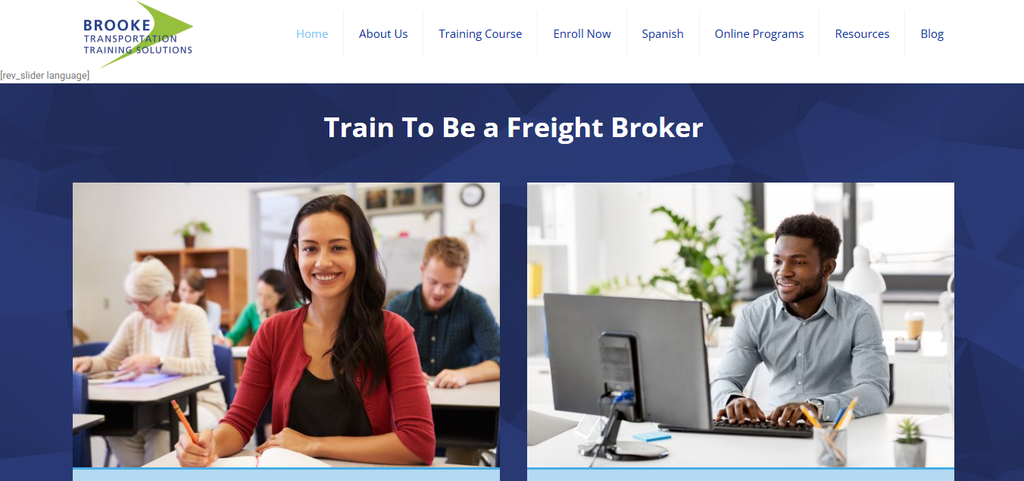
The program also advertises recruiter networking and placement assistance through its Resource Friday activities. These opportunities do not guarantee employment or a specific income. The main drawback is the higher tuition, especially when travel and accommodation are necessary.
3. Freight 360 / DAT – Best for Ongoing Coaching
Freight 360, available through DAT, offers self-paced training and optional coaching. Its Freight Broker Basics course contains 40 lessons across seven modules. Topics include customer acquisition, carrier management, dispatching, and brokerage administration.
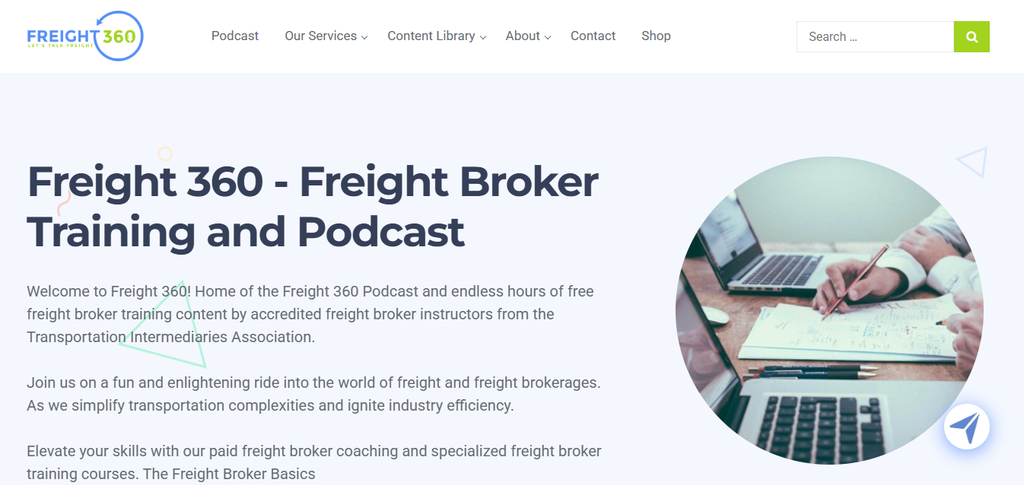
The course lists a regular price of $749, with a $599 DAT promotional rate. Group coaching costs $349 monthly, while private coaching costs $999 monthly. The main limitation is that ongoing coaching requires additional spending beyond the base course.
4. Loadtraining Freight Broker School – Best for Hands-On Learning
Loadtraining Freight Broker School offers self-paced, live virtual, and classroom training. Its online program costs $499 and advertises more than 40 hours of instruction. Coursework covers freight pricing, contracts, carrier verification, sales, and business operations.
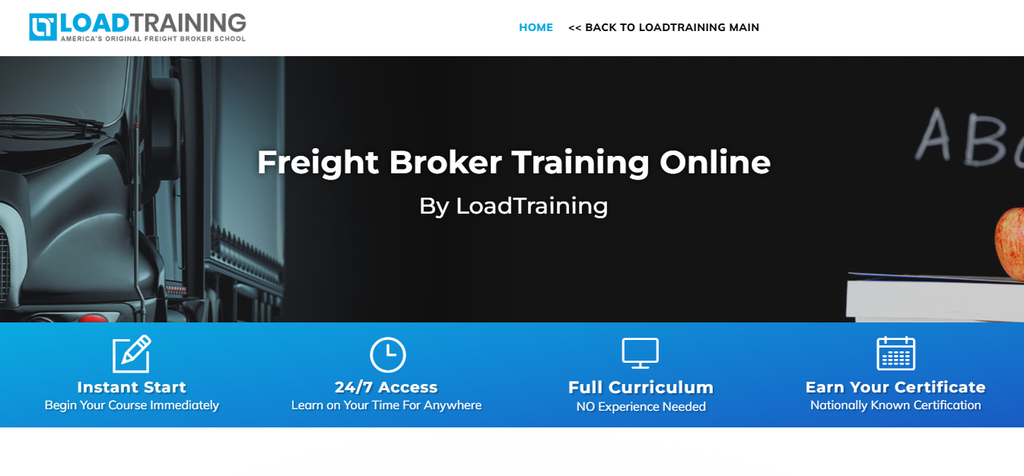
Loadtraining also advertises live instruction involving real brokerage activity, including coordinating freight and communicating with carriers. This practical experience is a key distinction from recorded-only courses. The limitation is that live training costs more, and travel may be necessary for classroom attendance.
5. TIA Certified Transportation Broker (CTB) – Best for Professional Development
The Transportation Intermediaries Association offers the Certified Transportation Broker credential for freight brokerage professionals. Its structured study program requires approximately 180 hours. Coursework focuses on business management, transportation regulations, contracts, and professional brokerage knowledge.
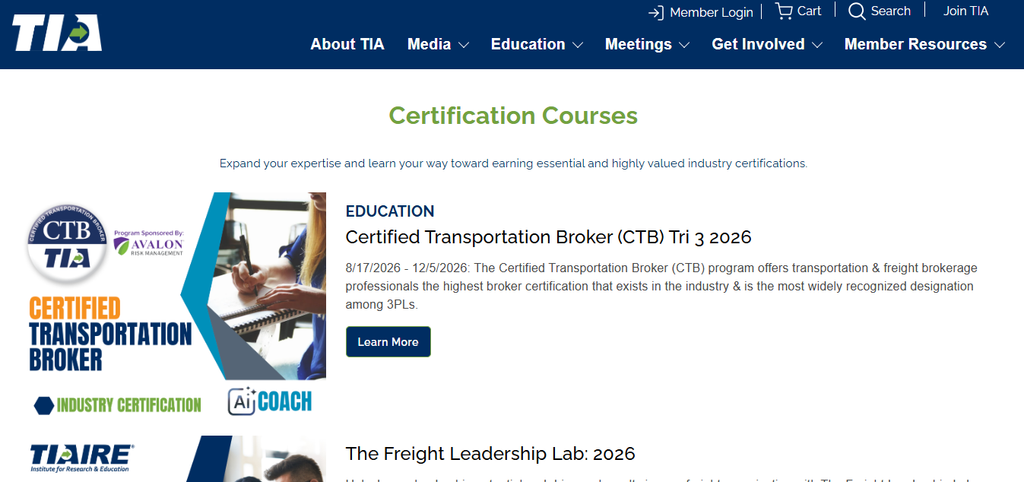
Published 2026 course pricing has varied between enrollment periods, with examples around 1,125–1,325 before textbook costs. Candidates must complete the required examinations to earn the credential. CTB is better suited to professional development than a short beginner introduction, and enrollment availability requires confirmation.
How Do the Best Freight Broker Training Programs Compare?
The main differences are price, delivery format, training depth, and student support. Self-paced courses generally provide greater scheduling flexibility. Live programs offer more direct instructor interaction, while CTB focuses on professional certification.
| Program | Best For | Published Price | Duration | Format | Support |
| Freight Broker Boot Camp | Beginners | $389 standard | Self-paced | Online | Community and student support |
| Brooke Training | Live learning | $2,495 | 5 days | Classroom / Virtual | Instructor guidance, recruiter access |
| Freight 360 / DAT | Coaching | $599 promotional / $749 regular | 40 lessons | Online | Optional paid coaching |
| Loadtraining | Practical learning | $499 online | 40+ hours | Online / Live | Instructor support |
| TIA CTB | Professional certification | Approximately 1,125–1,325, plus textbook | 180 hours | Online study | Structured coursework and exams |
For affordable self-paced learning, compare Freight Broker Boot Camp, Freight 360, and Loadtraining’s online course. Brooke suits learners wanting scheduled instructor contact. TIA’s CTB is a different pathway for professionals seeking a formal industry credential.
How to Choose the Right Freight Broker Training Program
Choose a freight broker training program by checking its curriculum, instructor experience, practical exercises, and total cost. A trustworthy provider should clearly explain what enrollment includes. Compare the same criteria across every course rather than relying only on promotional claims.
Check whether the curriculum covers freight pricing, shipper acquisition, contracts, and carrier verification. Ask whether students practice preparing rate quotes or using load board software. Also confirm whether instructor feedback, mentorship, and post-course support are included.
Read independent reviews and examine the provider’s refund policy before purchasing. For example, Freight Broker Boot Camp publishes specific refund conditions, while Brooke advertises recruiter networking opportunities. Avoid treating income claims, certificates, or placement assistance as guaranteed career results.
How Much Does Freight Broker Training Cost?
Freight broker training can cost under $500 for self-paced study or over $2,000 for instructor-led instruction. For example, Loadtraining lists $499 online, while Brooke’s basic course costs $2,495. Additional expenses may include textbooks, private coaching, travel, and software subscriptions.
Free freight broker training is available through educational articles, videos, and resources from organizations like FMCSA. These materials can explain regulations and introductory brokerage concepts. However, free learning may not provide structured assignments or personalized feedback.
Higher tuition does not automatically produce better career outcomes. Compare the skills taught, support provided, and total enrollment cost. Evaluate value by whether the course prepares you for the specific brokerage work you want to pursue.
Online vs. In-Person Freight Broker Training: Which Is Better?
Online freight broker training offers flexible scheduling, while classroom training provides direct instructor interaction. Self-paced courses allow students to repeat lessons and study around existing commitments. Live classes provide scheduled practice and immediate opportunities to ask questions.
Freight Broker Boot Camp and Freight 360 emphasize self-paced learning. Brooke and Loadtraining offer instructor-led alternatives. Choose according to your budget, preferred learning method, and need for direct feedback.
What Skills Should Freight Broker Training Teach?
Freight broker training should develop practical abilities in sales, pricing, carrier selection, and shipment management. Students need to understand how shippers purchase transportation services. They should also learn how brokers coordinate reliable carriers and protect customer relationships.
An effective curriculum covers:
- Shipper prospecting: Finding manufacturers, distributors, and other potential freight customers.
- Carrier verification: Checking operating authority, insurance information, and suspicious carrier activity.
- Freight pricing: Understanding market rates, negotiation, and brokerage margins.
- Load boards: Learning platforms such as DAT and Truckstop.
- Freight documents: Understanding bills of lading, contracts, and rate confirmations.
- Operations software: Using transportation management systems to organize shipments.
- Fraud prevention: Recognizing double brokering, identity misuse, and suspicious load requests.
Students should also understand how customer relationship management software helps organize sales activity. Practical exercises can include preparing quotes, reviewing carrier documents, and responding to shipment delays. These tasks help connect classroom knowledge with brokerage operations.
Do You Need Freight Broker Certification or a License?
You do not need a training certificate to apply for U.S. freight broker authority. However, operating an independent freight brokerage generally requires registration with the Federal Motor Carrier Safety Administration. Completing an online course does not replace this requirement.
The FMCSA lists a $300 application fee and $75,000 in required financial security. Brokers must also arrange a BOC-3 process agent filing. The $75,000 amount is the required security coverage, not necessarily the cash cost of obtaining a surety bond.
Updated financial responsibility rules took effect on January 16, 2026. Freight agents acting under an authorized brokerage generally do not need separate authority for qualifying agency work. Professional credentials such as CTB are distinct from government operating authority.
What Can You Do After Freight Broker Training?
After completing training, you can seek freight agent opportunities or prepare to start your own brokerage. Freight agents work with authorized brokerage businesses to arrange transportation. Independent brokers must meet regulatory requirements and establish their own customer and carrier relationships.
Some training providers offer recruiter introductions or career assistance. However, completing a course does not guarantee employment or business revenue. Begin building practical experience through shipper outreach, pricing exercises, carrier screening, and supervised operations where available.
Frequently Asked Questions About Freight Broker Training
Can I Become a Freight Broker Without Experience?
Yes, beginners can learn freight brokerage without previous logistics experience. Introductory courses teach concepts such as pricing, customer acquisition, and shipment coordination. Independent operation still requires applicable registration and financial security.
How Long Does Freight Broker Training Take?
Training duration depends on the program and learning format. Brooke offers five-day basic classes, while Loadtraining advertises over 40 hours of online instruction. TIA’s CTB program requires approximately 180 study hours.
Is Free Freight Broker Training Worth It?
Free training can help beginners understand freight brokerage before purchasing a course. FMCSA resources explain regulatory requirements, while educational videos can introduce daily operations. Paid instruction may offer more structured practice and direct feedback.
Can I Work From Home After Training?
Many freight brokerage tasks can be performed remotely with suitable technology. Brokers commonly communicate through email, phone, and logistics software. Remote work still requires reliable customer relationships and compliance with applicable regulations.
Is Freight Broker Training Still Worth It in 2026?
Freight broker training remains relevant for learning transportation operations and current industry practices. Modern coursework should address digital freight tools, carrier fraud prevention, and changing regulatory requirements. Its financial value depends on the program, your goals, and your ability to apply the skills.
Final Thoughts: Which Freight Broker Training Is Right for You?
The right freight broker training depends on your budget, experience, and preferred learning format. Compare Freight Broker Boot Camp, Freight 360, and Loadtraining for self-paced learning, or Brooke for live instruction. Consider TIA’s CTB program for professional certification rather than basic introductory training.
Before enrolling, verify current tuition, course content, support arrangements, and refund terms. Focus on practical skills and clear learning outcomes instead of income promises. Choose the program that best supports your intended career path.