

Managing people can feel difficult, especially when your team struggles with communication or performance. You might read management advice but still wonder which ideas actually work. With hundreds of recommendations available, choosing the right book becomes another challenge.
The top management books offer practical guidance on leadership, employee motivation, teamwork, and decision-making. Some teach beginners how to manage employees, while others explain advanced business strategy. Choosing a relevant book can help you address specific workplace problems.
This article covers 20 management books worth reading in 2026. You’ll discover their main lessons, ideal readers, strengths, and limitations. You’ll also find book comparisons, practical examples, and guidance for choosing your next read.
Top 20 Best Management Books of All Time
The best management books combine practical advice, clear explanations, and lessons relevant to everyday management. The following 20 titles cover important subjects such as delegation, communication, employee development, and organizational performance. They include established classics alongside more recent books addressing modern workplace responsibilities.
These recommendations were selected for their management relevance, recognizable frameworks, practical applications, and suitability for different experience levels. The selection also considers whether each book addresses a distinct workplace challenge. The numbered list is an editorial reading selection, not a scientifically established ranking.
Management development matters because employee engagement remains a significant workplace challenge. According to Gallup’s State of the Global Workplace 2026, global manager engagement fell from 31% in 2022 to 22% in 2025. Reading alone cannot solve disengagement, but relevant management education can support better workplace practices.
1. The Effective Executive by Peter F. Drucker
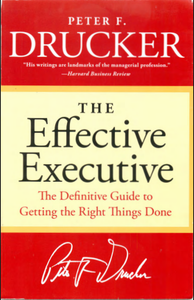
Best for: Time management, prioritization, and effective decision-making.
The Effective Executive explains how managers can produce meaningful results instead of simply staying busy. Published in 1967, Peter F. Drucker’s book focuses on improving individual effectiveness within organizations. Its central message is that effective performance comes from learnable management practices.
Drucker identifies five practices involving time, contribution, strengths, priorities, and decision-making. For example, managers can review their calendars to identify meetings that consume time without producing results. They can then protect time for planning, employee development, and important organizational decisions.
Key takeaway: Managing your priorities matters more than completing every available task. The book suits managers who struggle with competing responsibilities and constant interruptions. Its main limitation is that several examples reflect earlier corporate structures.
2. High Output Management by Andrew S. Grove
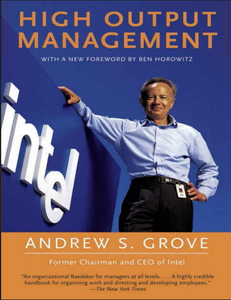
Best for: Team productivity, operational management, and employee development.
High Output Management explains how managers improve results through better coordination, training, and performance measurement. Andrew S. Grove originally published the book in 1983, drawing on his experience at Intel. It connects management practices with the collective output of a team.
Grove introduces managerial leverage, which describes how management activities influence overall productivity. The book also discusses one-on-one meetings, employee training, performance reviews, and operational planning. For example, a department manager can use weekly meetings to identify obstacles before they affect delivery targets.
Key takeaway: A manager’s performance depends heavily on the results achieved by their team. The book provides structured methods for improving efficiency and developing employees. However, some measurement approaches need adaptation for creative work or less predictable responsibilities.
3. The Making of a Manager by Julie Zhuo
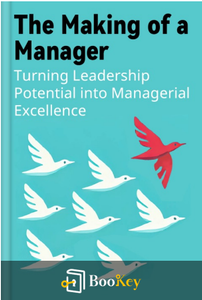
Best for: First-time managers, new team leaders, and aspiring managers.
The Making of a Manager explains what happens when an individual contributor becomes responsible for managing employees. Published in 2019, Julie Zhuo’s book draws on her management experience at Facebook. It addresses the uncertainty that often accompanies a first leadership position.
The book covers building trust, hiring, giving feedback, running meetings, and developing employees. Zhuo explains how managers can balance everyday responsibilities with supporting their teams. For example, a newly promoted manager can establish regular conversations to understand employee concerns and expectations.
Key takeaway: Effective management requires communication, continuous learning, and attention to employee development. Its approachable explanations make it suitable for readers without formal management training. Experienced executives may find its introductory material less useful for complex strategic decisions.
4. The One Minute Manager by Kenneth Blanchard and Spencer Johnson
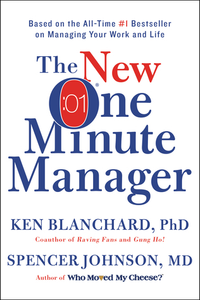
Best for: Goal setting, employee feedback, and beginner management skills.
The One Minute Manager introduces a simple approach to helping employees understand expectations and improve performance. Originally published in 1982, the book presents its lessons through a short fictional story. Its accessible format makes important management concepts easier to remember.
The original framework emphasizes one minute goals, praising effective performance, and addressing mistakes promptly. A revised edition, The New One Minute Manager, updates the approach for contemporary workplaces. For example, managers can establish clear weekly objectives and acknowledge progress when employees achieve them.
Key takeaway: Clear expectations and timely feedback support better performance conversations. The book is suitable for beginners seeking a short introduction to everyday management. However, its simplified approach cannot fully address complicated employee disputes or organizational problems.
5. The First 90 Days by Michael D. Watkins
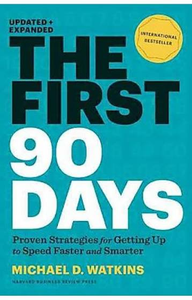
Best for: New management positions, promotions, and leadership transitions.
The First 90 Days explains how professionals can prepare for a new leadership role. Michael D. Watkins originally published the book in 2003, with later editions expanding its guidance. It focuses on learning quickly, establishing credibility, and avoiding preventable transition mistakes.
Watkins introduces the STARS framework for understanding different organizational situations. These include startup, turnaround, accelerated growth, realignment, and sustaining success. For example, a new department manager can spend the first month reviewing performance before making substantial changes.
Key takeaway: Early preparation and clear priorities help managers approach new responsibilities more effectively. The book is particularly relevant when joining another company or accepting a promotion. Its primary focus is leadership transitions rather than long-term daily management.
6. The Five Dysfunctions of a Team by Patrick Lencioni
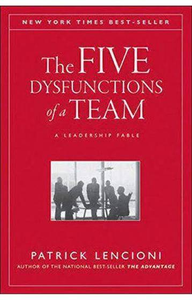
Best for: Team building, workplace trust, and shared accountability.
The Five Dysfunctions of a Team explores common problems that prevent employees from working together effectively. Published in 2002, Patrick Lencioni’s book explains teamwork through a fictional business story. Its framework connects individual behavior with broader team performance.
The five dysfunctions involve trust, conflict, commitment, accountability, and attention to results. Lencioni argues that unresolved problems in one area can weaken other aspects of teamwork. For example, managers can encourage respectful disagreements before asking employees to commit to important decisions.
Key takeaway: Strong teamwork requires trust, constructive disagreement, and clear accountability. The book suits managers leading departments with communication problems or competing priorities. Its fictional structure simplifies organizational behavior, so the framework should not replace careful diagnosis.
7. Radical Candor by Kim Scott
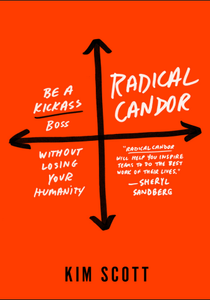
Best for: Employee feedback, difficult conversations, and workplace relationships.
Radical Candor explains how managers can give direct feedback while maintaining respectful employee relationships. Kim Scott published the book in 2017, drawing on her leadership experience in technology companies. Its central framework combines caring personally with challenging directly.
Scott explains why avoiding uncomfortable conversations can prevent employees from improving. The book also distinguishes honest feedback from aggressive criticism and excessive politeness. For example, a manager can discuss missed deadlines while helping an employee identify reasonable improvements.
Key takeaway: Useful feedback combines clear expectations with genuine concern for employee development. Managers handling performance reviews and regular coaching conversations may find this approach relevant. However, communication methods should reflect cultural differences and individual employee needs.
8. Good to Great by Jim Collins
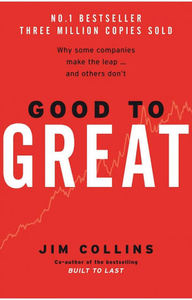
Best for: Business strategy, organizational performance, and executive leadership.
Good to Great examines how selected companies moved from ordinary performance toward stronger business results. Published in 2001, Jim Collins’ book draws on comparative research into corporate performance. It identifies management characteristics associated with the companies studied.
The book introduces Level 5 Leadership, the Hedgehog Concept, and the Flywheel Effect. These concepts emphasize disciplined leadership, strategic focus, and sustained execution. For example, executives can evaluate whether a proposed expansion matches their organization’s established strengths.
Key takeaway: Disciplined leadership and consistent strategic choices are central themes of the book. It suits executives interested in business direction and organizational improvement. However, some featured companies later struggled, limiting predictions based on the original findings.
9. Measure What Matters by John Doerr
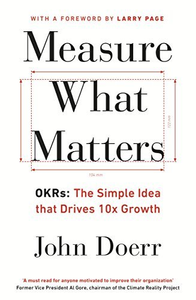
Best for: Goal setting, performance measurement, and organizational alignment.
Measure What Matters explains how organizations can connect ambitious goals with measurable results. Published in 2018, John Doerr’s book focuses on Objectives and Key Results, commonly called OKRs. The approach helps departments understand their priorities and monitor progress.
An objective describes what a team wants to achieve, while key results measure success. Doerr discusses organizational examples involving companies such as Intel and Google. For example, a support team might aim to improve customer satisfaction while monitoring response times.
Key takeaway: Clear objectives and measurable outcomes help employees work toward shared priorities. The book suits managers responsible for departmental planning and performance improvement. Poorly selected measurements can encourage employees to prioritize numbers over meaningful results.
10. The 7 Habits of Highly Effective People by Stephen R. Covey
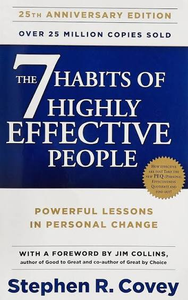
Best for: Personal effectiveness, prioritization, and leadership development.
The 7 Habits of Highly Effective People explores personal responsibility, effective relationships, and long-term thinking. Stephen R. Covey published the book in 1989, presenting seven principles for improving personal effectiveness. These ideas apply to professional development as well as everyday life.
Covey emphasizes proactive behavior, thoughtful priorities, cooperation, and understanding other people’s perspectives. His approach encourages readers to focus on important responsibilities before urgent distractions. For example, managers can reserve time for employee development instead of responding constantly to routine messages.
Key takeaway: Personal discipline and effective relationships support responsible management behavior. The book suits aspiring managers who want stronger habits before accepting leadership responsibilities. It offers less detailed guidance on hiring, organizational planning, and formal performance management.
11. Leaders Eat Last by Simon Sinek
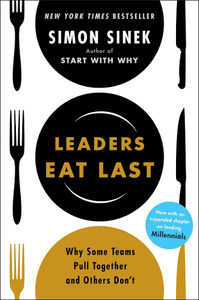
Best for: Employee trust, supportive leadership, and workplace culture.
Leaders Eat Last examines how leadership behavior influences employee cooperation and workplace relationships. Published in 2014, Simon Sinek’s book introduces the idea of a Circle of Safety. This concept emphasizes creating an environment where employees feel supported rather than unnecessarily threatened.
Sinek combines organizational stories with explanations of trust, stress, and leadership responsibility. The book encourages managers to consider how their decisions affect employee wellbeing. For example, a leader can respond to an honest mistake with constructive feedback instead of public embarrassment.
Key takeaway: Supportive leadership can help create conditions for better trust and cooperation. The book suits managers who want to examine the relationship between leadership behavior and organizational culture. Some biological explanations simplify complex human behavior and require cautious interpretation.
12. Crucial Conversations by Kerry Patterson and Coauthors
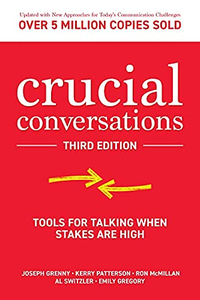
Best for: Conflict resolution, difficult discussions, and workplace communication.
Crucial Conversations teaches communication techniques for situations involving disagreement, strong emotions, and important consequences. Originally published in 2002, it was written by Kerry Patterson, Joseph Grenny, Ron McMillan, and Al Switzler. Later editions provide updated examples and explanations.
The book emphasizes maintaining dialogue, distinguishing facts from assumptions, and identifying shared goals. Its techniques can support performance discussions, workplace disagreements, and sensitive management decisions. For example, a manager can address repeated attendance problems without immediately making personal accusations.
Key takeaway: Difficult conversations become more productive when participants communicate clearly and respectfully. The book suits managers who regularly handle conflict or sensitive employee concerns. Its techniques require practice and may not resolve disagreements involving deeper organizational problems.
13. The Manager’s Path by Camille Fournier
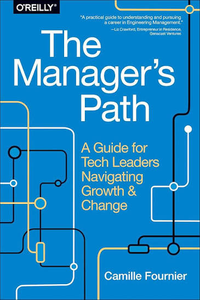
Best for: Engineering managers, technical team leaders, and management career progression.
The Manager’s Path explains how technical professionals can develop into effective engineering leaders. Published in 2017, Camille Fournier’s book follows different stages of technical management. It covers the transition from individual contributor to manager, senior leader, and executive.
Fournier discusses mentoring, employee development, organizational responsibility, and managing other managers. The book explains how leadership expectations change as engineering departments expand. For example, a technical manager can learn when to delegate implementation decisions and focus on developing employees.
Key takeaway: Growing management responsibilities require different skills at each career stage. The book provides career guidance for professionals working in software and technical organizations. Its specialized examples may be less applicable to nontechnical departments.
14. Turn the Ship Around! by L. David Marquet
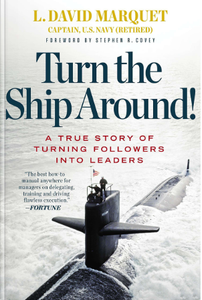
Best for: Delegation, employee empowerment, and distributed leadership.
Turn the Ship Around! explores how managers can develop employees who take greater responsibility for decisions. Published in 2012, L. David Marquet’s book describes his experience commanding the USS Santa Fe. He uses this experience to question leadership approaches based on constant instructions.
Marquet introduces a leader-leader approach that emphasizes competence, clarity, and decision-making responsibility. The book encourages managers to develop employee judgment instead of approving every routine action. For example, qualified employees can explain intended decisions before proceeding within clearly defined authority.
Key takeaway: Effective delegation depends on employee capability, clear responsibilities, and appropriate decision-making authority. The book suits managers who want to reduce unnecessary dependence on supervisors. Its military setting requires adaptation to civilian organizations and different workplace cultures.
15. Multipliers by Liz Wiseman
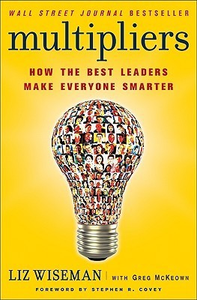
Best for: Employee development, delegation, and improving team contributions.
Multipliers explores how leadership behavior can encourage or restrict employee capability. Published in 2010, Liz Wiseman’s book contrasts leaders who develop talent with those who limit contributions. The author calls these contrasting approaches Multipliers and Diminishers.
Wiseman discusses leadership practices involving talent development, debate, ownership, and employee independence. Her framework encourages managers to create opportunities for employees to solve challenging problems. For example, a supervisor can request proposed solutions before offering a preferred answer.
Key takeaway: Managers can support stronger employee contributions by encouraging independent thinking. The book suits team leaders responsible for developing employee capability and confidence. Its contrasting leadership categories simplify behavior that can change across different situations.
16. Drive by Daniel H. Pink
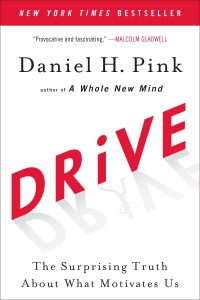
Best for: Employee motivation, engagement, and meaningful work.
Drive explores the psychological factors influencing human motivation. Published in 2009, Daniel H. Pink’s book emphasizes autonomy, mastery, and purpose. It challenges the assumption that financial incentives always produce better performance.
Pink draws on motivational research to explain how different working conditions affect behavior. The book encourages managers to consider independence, skill development, and meaningful responsibilities. For example, employees might choose how to complete assigned work while following agreed quality standards.
Key takeaway: Autonomy, opportunities to improve, and meaningful work can support employee motivation. The book suits managers seeking alternatives to relying exclusively on bonuses or rewards. However, fair compensation remains essential, particularly when employees face financial insecurity.
17. The Culture Code by Daniel Coyle
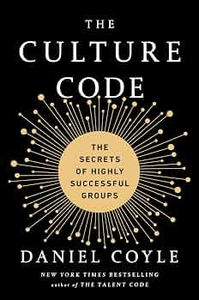
Best for: Team culture, psychological safety, and workplace cooperation.
The Culture Code examines how successful groups establish trust, cooperation, and shared direction. Published in 2018, Daniel Coyle’s book explores behavior within different organizations. It identifies safety, vulnerability, and purpose as central elements of strong group culture.
Coyle uses organizational stories to explain how small interactions influence workplace relationships. The book emphasizes honest communication, shared expectations, and leadership behavior. For example, managers can encourage questions during meetings and acknowledge mistakes without blaming individual employees.
Key takeaway: Workplace culture develops through repeated behavior, shared purpose, and interpersonal trust. The book suits team leaders who want to strengthen cooperation across departments. Its case studies illustrate useful ideas but cannot guarantee identical results elsewhere.
18. The Practice of Management by Peter F. Drucker
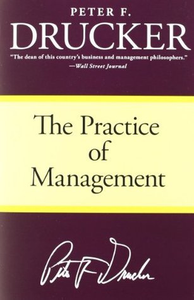
Best for: Management fundamentals, business planning, and organizational objectives.
The Practice of Management examines the responsibilities involved in managing organizations and developing employees. First published in 1954, Peter F. Drucker’s book influenced modern management theory. It addresses business objectives, organizational structure, managerial responsibility, and employee contribution.
The book helped popularize Management by Objectives, often shortened to MBO. This approach connects broader organizational goals with the responsibilities of individual managers. For example, a sales manager can establish measurable departmental targets supporting company revenue objectives.
Key takeaway: Clear objectives and defined responsibilities support effective organizational management. The book suits readers interested in foundational management principles and business administration. Some examples reflect older business structures and require interpretation for contemporary workplaces.
19. The Coaching Habit by Michael Bungay Stanier
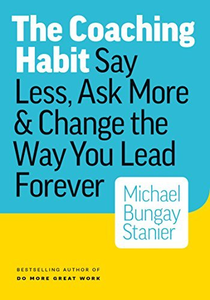
Best for: Employee coaching, effective questioning, and leadership conversations.
The Coaching Habit explains how managers can improve coaching by asking useful questions. Published in 2016, Michael Bungay Stanier’s book introduces seven questions for everyday coaching conversations. Its approach encourages managers to listen instead of immediately prescribing solutions.
The book helps managers identify underlying problems and develop employee independence. It also encourages shorter, more focused coaching conversations during routine workplace interactions. For example, a manager can ask employees to identify their main challenge before discussing possible actions.
Key takeaway: Thoughtful questions can help employees develop judgment and take responsibility for their work. The book suits managers who spend substantial time advising or supporting employees. Coaching cannot replace direct instructions when urgent decisions or immediate safety concerns require action.
20. The Hard Thing About Hard Things by Ben Horowitz
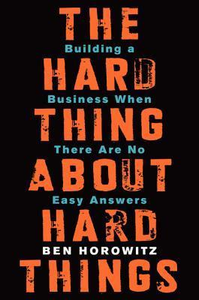
Best for: Startup founders, business owners, and executives handling difficult decisions.
The Hard Thing About Hard Things examines the demanding responsibilities involved in running a business. Published in 2014, Ben Horowitz’s book draws on his experience as a technology entrepreneur. It addresses leadership situations where straightforward solutions may not exist.
Horowitz discusses hiring executives, restructuring organizations, managing layoffs, and handling business crises. He also explores the emotional pressure associated with difficult leadership decisions. For example, a founder facing falling revenue must balance financial survival with responsible employee communication.
Key takeaway: Business leadership sometimes requires difficult decisions without perfect information. The book suits founders and senior executives facing uncertainty or organizational pressure. Its technology startup focus limits how directly some experiences apply to established organizations.
Quick Comparison of the Top Management Books
The best management book for you depends on your experience, responsibilities, and immediate workplace challenges. Some titles provide beginner guidance, while others focus on organizational strategy or specialized management. This comparison highlights the main differences without requiring you to read every review again.
| Book | Main focus | Ideal reader | Difficulty |
| The Effective Executive | Priorities and decisions | Managers and executives | Intermediate |
| High Output Management | Team productivity | Team leaders | Intermediate |
| The Making of a Manager | Management fundamentals | First-time managers | Beginner |
| The One Minute Manager | Goals and feedback | New managers | Beginner |
| The First 90 Days | Leadership transitions | Newly promoted managers | Intermediate |
| The Five Dysfunctions of a Team | Trust and accountability | Team managers | Beginner |
| Radical Candor | Employee feedback | People managers | Beginner |
| Good to Great | Business strategy | Executives | Intermediate |
| Measure What Matters | Goals and performance | Department managers | Intermediate |
| The 7 Habits of Highly Effective People | Personal effectiveness | Aspiring managers | Beginner |
| Leaders Eat Last | Trust and leadership | People leaders | Beginner |
| Crucial Conversations | Difficult discussions | All management levels | Intermediate |
| The Manager’s Path | Technical leadership | Engineering managers | Advanced |
| Turn the Ship Around! | Delegation and ownership | Experienced managers | Intermediate |
| Multipliers | Employee development | Team leaders | Intermediate |
| Drive | Employee motivation | People managers | Intermediate |
| The Culture Code | Workplace culture | Team leaders | Beginner |
| The Practice of Management | Management principles | Business managers | Advanced |
| The Coaching Habit | Coaching conversations | People managers | Beginner |
| The Hard Thing About Hard Things | Executive decisions | Founders and executives | Advanced |
The difficulty ratings are editorial estimates based on subject complexity and presentation style. They are not official ratings supplied by the authors or publishers. Readers with relevant industry experience may find specialized titles easier than these labels suggest.
For a first management role, The Making of a Manager provides broad introductory guidance. Choose High Output Management for operational productivity or Radical Candor for employee feedback. Senior leaders facing strategic challenges can consider The Effective Executive or The Hard Thing About Hard Things.
Best Management Books for Different Experience Levels
The best management books for your career stage should address responsibilities you currently handle or expect to face. New managers often need help with employee communication, delegation, and setting expectations. Experienced managers usually benefit from deeper guidance on organizational performance and leadership decisions.
Best Books for First-Time Managers and Beginners
The Making of a Manager, The One Minute Manager, and The First 90 Days are useful beginner recommendations. Each addresses a different challenge associated with entering management. Their practical examples help readers understand responsibilities without requiring extensive business knowledge.
The Making of a Manager explains everyday supervision, feedback, hiring, and employee development. The One Minute Manager introduces basic goal setting and performance conversations. The First 90 Days provides guidance for establishing priorities after a promotion or job change.
Start with The Making of a Manager if you need general management guidance. Choose The First 90 Days when preparing for a specific leadership transition. Read The One Minute Manager for a shorter introduction to setting expectations and giving feedback.
Best Books for Experienced Managers and Team Leaders
High Output Management, Multipliers, and Radical Candor provide guidance for experienced people managers. They address performance improvement, employee development, and effective communication. These responsibilities become increasingly important as teams grow and work becomes more complex.
High Output Management explains how managerial activities influence employee productivity. Multipliers encourage managers to develop talent through responsibility and independent thinking. Radical Candor focuses on direct communication and supportive feedback.
Experienced managers can also consider The Coaching Habit when employees depend heavily on supervisory advice. Its questions encourage employees to examine problems and propose their own solutions. This approach can complement the more operational guidance found in High Output Management.
Best Books for Senior Executives and Business Owners
The Effective Executive, Good to Great, and The Hard Thing About Hard Things address senior leadership responsibilities. They focus on priorities, organizational strategy, and difficult business decisions. Their lessons are particularly relevant when decisions affect several departments or the entire organization.
The Effective Executive emphasizes time allocation, contribution, and disciplined decision-making. Good to Great examines strategic focus and organizational performance through corporate research. The Hard Thing About Hard Things explores difficult executive responsibilities during business uncertainty.
Business owners should select books according to their immediate responsibilities. A founder managing financial pressure may benefit from Horowitz’s experiences, while a department executive may prefer Drucker’s approach. Neither book replaces financial, legal, or professional advice for consequential business decisions.
Best Management Books for Specific Workplace Challenges
Management books become more useful when their advice addresses a problem you’re already trying to solve. Some focus on employee motivation, while others explain communication, delegation, or organizational change. Matching the book to the challenge can make its lessons easier to apply.
Managing People, Motivating Employees, and Building Teams
Drive, Multipliers, and The Five Dysfunctions of a Team address common people management challenges. They explain different aspects of motivation, employee capability, and teamwork. Together, they provide useful perspectives on managing individual contributions and group performance.
Drive discusses autonomy, mastery, and purpose as motivational influences. Multipliers explains how managers can encourage employee independence and stronger contributions. The Five Dysfunctions of a Team addresses trust, constructive conflict, and shared accountability.
Suppose employees rarely contribute during team meetings. A manager could use Multipliers to encourage independent suggestions and The Culture Code to improve trust. Progress could then be assessed through participation, employee feedback, and completed responsibilities.
Improving Communication, Feedback, and Conflict Resolution
Radical Candor and Crucial Conversations address communication problems that affect employee relationships and performance. Both encourage clear discussion instead of avoiding uncomfortable subjects. Their focus differs according to the type of conversation.
Radical Candor is particularly relevant for regular feedback and employee development. Crucial Conversations focuses on discussions involving disagreement, strong emotions, and significant consequences. Managers can combine both approaches when preparing for difficult performance conversations.
For example, an employee might repeatedly miss important project deadlines. The manager can describe the missed commitments and explain their impact without making personal accusations. Both participants can then discuss underlying problems and agree on realistic corrective actions.
Delegation, Productivity, and Performance Management
High Output Management, Measure What Matters, and Turn the Ship Around! address operational performance and employee ownership. Each offers a different approach to improving execution. Managers can select one based on whether their main concern is productivity, goals, or delegation.
High Output Management examines managerial leverage and collective performance. Measure What Matters explains how objectives and measurable results support organizational alignment. Turn the Ship Around! encourages employees to make appropriate decisions within clear responsibilities.
Consider a support department struggling with slow customer responses. The manager might set a measurable improvement objective and assign specific responsibilities to employees. Weekly reviews could then examine whether response times improve without reducing service quality.
Strategic Decision-Making and Organizational Change
Good to Great, The Effective Executive, and The Hard Thing About Hard Things address strategic decisions and business uncertainty. Their perspectives range from long-term organizational performance to difficult executive judgment. These subjects matter when managers influence budgets, staffing, expansion, or restructuring.
Good to Great emphasizes disciplined strategic focus and organizational execution. The Effective Executive encourages leaders to focus attention on decisions producing meaningful contributions. The Hard Thing About Hard Things discusses difficult situations where executives cannot avoid uncertainty.
For example, a business owner considering expansion must examine financial resources and operational capacity. The owner can use strategic principles to evaluate the opportunity and identify possible risks. Final decisions should also rely on current business data and relevant professional expertise.
Classic vs. Modern Management Books: Which Should You Read?
Classic management books explain established principles, while modern books often address newer workplace challenges. Both can provide relevant lessons for contemporary managers. Their usefulness depends on how closely the material matches your responsibilities.
The Effective Executive and The Practice of Management emphasize priorities, organizational objectives, and managerial responsibility. These subjects remain relevant to departments managing limited resources and competing business goals. However, their historical examples may not reflect current workplace arrangements.
Modern titles such as The Making of a Manager and Radical Candor emphasize communication and employee development. The Manager’s Path examines leadership responsibilities within technical organizations. These books offer more context for certain contemporary management situations.
| Classic books | Modern books |
| Established management principles | Contemporary management practices |
| Organizational planning and effectiveness | Coaching, communication, and team culture |
| The Effective Executive | The Making of a Manager |
| The Practice of Management | Radical Candor |
| Historical business examples | More recent workplace examples |
Read classic books for foundational principles and modern books for specific workplace applications. For example, Drucker’s guidance on priorities can complement Julie Zhuo’s advice on supporting employees. You don’t need to choose one category exclusively.
How to Choose the Right Management Book
Choose a management book that matches your experience, workplace challenges, and preferred learning style. Popularity alone doesn’t establish whether a particular title will help you. A useful book should explain concepts you can understand and realistically apply.
Match the Book to Your Management Goals
Start by identifying one specific management skill you want to improve. This might involve employee feedback, delegation, productivity, or business planning. Then select a book that directly addresses that responsibility.
| Your management goal | Recommended book |
| Manage your first team | The Making of a Manager |
| Improve employee feedback | Radical Candor |
| Build team trust | The Five Dysfunctions of a Team |
| Set measurable goals | Measure What Matters |
| Improve delegation | Turn the Ship Around! |
| Coach employees | The Coaching Habit |
| Improve strategic decisions | The Effective Executive |
| Handle difficult business decisions | The Hard Thing About Hard Things |
Choose one priority before beginning another management book. Reading unrelated titles simultaneously can make practical application difficult. Focus on a relevant concept, test it, and review what changes.
Consider Practical Lessons, Author Expertise, and Reading Difficulty
Evaluate the author’s background, practical guidance, and reading difficulty before selecting a title. Management authors bring different forms of experience to their work. Some rely heavily on personal experiences, while others incorporate organizational research.
Peter Drucker contributed influential management theory, while Andrew Grove drew on his operational experience at Intel. Julie Zhuo explains her experience managing employees within a major technology company. Each perspective provides different insights into managerial responsibilities.
Also consider whether you prefer detailed frameworks or straightforward examples. The One Minute Manager offers a short, accessible introduction, while The Practice of Management requires more focused reading. Reviewing a book’s contents and sample pages can help you assess its suitability.
How to Apply Lessons From Management Books at Work
Apply management book lessons by choosing one practical idea and testing it in your workplace. Reading is useful, but application helps determine whether the advice fits your situation. A small, measurable change is easier to evaluate than a complete management overhaul.
Follow these five steps:
- Identify a problem. Choose a specific challenge, such as missed deadlines or unclear responsibilities.
- Select a relevant concept. Find a technique that addresses the identified issue.
- Explain the proposed change. Tell employees what will change and why.
- Test the approach. Apply it consistently during a defined period, such as four weeks.
- Review the outcome. Compare relevant performance measurements and employee feedback.
For example, a manager could apply OKRs from Measure What Matters to improve customer response times. The team might establish a target and monitor its progress weekly. After four weeks, the manager could review whether response times improved without harming customer satisfaction.
Avoid assuming every book technique will work in every organization. Employee experience, available resources, and workplace responsibilities affect implementation. Adjust the approach when feedback or performance measurements reveal problems.
Are Management Books Worth Buying?
Management books are worth buying when their lessons address a current need or provide useful long-term reference material. Their value depends on relevance, not simply price or popularity. A carefully chosen book may offer practical guidance you can revisit during future management challenges.
Consider the format that fits your reading habits and schedule. Printed books make annotation straightforward, while ebooks offer portable reading and searchable text. Audiobooks can suit commuting, although revisiting detailed frameworks may be less convenient.
| Format | Main advantage | Main limitation |
| Printed book | Easy to annotate | Requires physical storage |
| Ebook | Portable and searchable | Requires a compatible device |
| Audiobook | Convenient while commuting | Harder to revisit tables |
| Library copy | Often free to borrow | Availability and loan periods vary |
| Book summary | Quick introduction | Omits detailed explanations |
You can also check public libraries and authorized digital lending services before purchasing. Free summaries may help you decide whether a complete book deserves your time. However, summaries often omit supporting examples, contextual explanations, and important limitations.
Common Mistakes to Avoid When Reading Management Books
The biggest mistake is applying management advice without considering your team’s actual circumstances. Even established books cannot provide universal answers for every workplace. The goal is to improve management practices through thoughtful application, not copy every recommendation.
Avoid these six mistakes:
- Choosing books only because they’re popular. Select titles that address your responsibilities and experience.
- Reading without applying lessons. Test relevant ideas during meetings, performance reviews, or coaching conversations.
- Ignoring workplace context. Adapt management frameworks to employee needs and organizational requirements.
- Overlooking a book’s limitations. Consider when examples or recommendations may not apply.
- Confusing leadership with management. Leadership emphasizes influence and direction, while management also involves planning and execution.
- Changing too much simultaneously. Introduce manageable improvements so you can evaluate their effects.
For example, a small creative agency may not need every reporting practice described in High Output Management. The manager could still use its principles to improve communication and clarify responsibilities. Adapting relevant ideas is more practical than imposing unnecessary processes.
Final Thoughts
The top management books help you understand different approaches to leading employees and improving workplace performance. You don’t need to read all 20 titles to benefit from their guidance. Start with a book that addresses your most immediate management challenge.
Choose The Making of a Manager for foundational guidance or High Output Management for improving team productivity. If communication is your biggest challenge, consider Radical Candor or Crucial Conversations. Read thoughtfully, apply useful lessons, and judge their value through real workplace results.
Frequently Asked Questions About Top Management Books
What Are the Best Management Books for Beginners?
The Making of a Manager, The One Minute Manager, and The First 90 Days are useful beginner management books. They address everyday responsibilities such as setting expectations, communicating clearly, and adjusting to new leadership positions. Start with The Making of a Manager for a broad introduction to managing employees.
Which Management Book Should I Read First?
The Making of a Manager is a suitable first choice for someone entering management. It explains responsibilities such as hiring, feedback, meetings, and employee development in accessible language. Experienced managers should instead choose a book addressing their most pressing workplace challenge.
What Is the Difference Between Leadership and Management Books?
Leadership books primarily emphasize influence and direction, while management books also address planning, coordination, and execution. Titles such as Leaders Eat Last focus heavily on leadership behavior and workplace culture. High Output Management provides more direct guidance on operational performance and managerial responsibilities.
Are Classic Management Books Still Relevant in 2026?
Classic management books remain relevant when their principles address present management responsibilities. Peter Drucker’s work on priorities, organizational objectives, and decision-making still offers useful concepts. However, readers should account for changing workplace structures and avoid applying historical examples without context.
Can Reading Management Books Make You a Better Manager?
Reading management books can support skill development when you understand and apply relevant lessons. Books provide frameworks for communication, delegation, employee development, and organizational planning. Improving management performance also requires experience, employee feedback, and evaluating actual workplace results.
Which Management Books Offer the Most Practical Advice?
High Output Management, Radical Candor, and The Coaching Habit provide directly applicable management techniques. They address operational productivity, employee feedback, and everyday coaching conversations. Choose the title matching your responsibilities rather than assuming one book offers the best advice for everyone.